Postcode: 3981
Days of Work: 22
Dates: 26th February 2013 – 20th March 2013
People: Andrew (Host), Yukari (Japanese WWOOFer), Belle (Taiwanese WWOOFer), Miako (Japanese WWOOFer), Megan (Scottish WWOOFer)
I went straight to Host #4 from Host #3. Sally was gracious and drove me to meet Andrew, my new host, and the morning we left, we had the worst rain storm Melbourne had seen in months, which was generally welcomed because of the increasing heat temperatures. However, it made driving a nightmare, especially when viability was cut down to about a car’s length! We headed straight out to the farm, and during the short trip, the weather eased, so I was able to get cracking with the work as soon as I arrived.
 Friends of the World
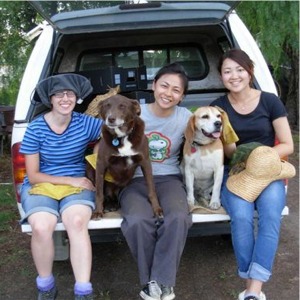
This was going to be the first place where there had been other WWOOFers (I don’t count Therese and Travis in Bathurst as they were permanent and more like regular workers, at least to me!). When I arrived, there were two other people in residence – Yukari from Japan and Belle from Taiwan.
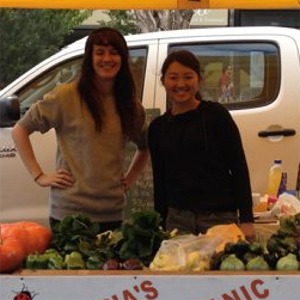
The farm is very popular with WWOOFers, and WWOOFers come and go at quite a pace. Despite only being there for just over three-weeks, both Yukari and Belle had left, with Miako from Japan and Megan from Scotland arriving in their places! The thing I miss most about these wonderful people is the late night chats in our shared bedroom!
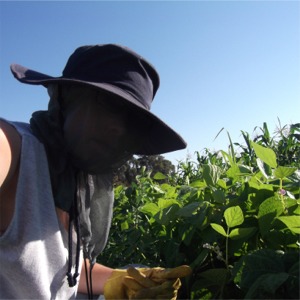
The work hours were long, but with reasonable breaks. Unlike animals, the fruit and veg don’t mind if you take a long lunch break – they’ll still be there growing strong when you come back! The majority of our workload was picking the vegetables, fruits and herbs that were ripe and ready for market.
 Picking
We picked: tomatoes (three different varieties), runner beans (green, purple and white), cucumbers (three varieties), zucchinis (two varieties), lettuce, carrots, spring onion, radish, beetroot, silver beet, corn, spinach, dill, parsley, basil, coriander, rock melon, pumpkin, squash, apples (about ten different varieties), oranges, peaches and pears!
Packing
Three times a week, the farm produce was taken to market – twice a week to a wholesale market in the city, and once a week to a local farmers market. Therefore, we did a lot of fruit and vegetable packing in the main shed, moving the packed boxes into the cool room ready for the morning. Most of the vegetables had to go through a three-stage wash process where the dirt was scrubbed away. Each wash bath had a sieve and we had to remove the dirt and bits that accumulated in the water with each batch of vegetables. Once fully cleaned and checked for imperfections, the successful fruit and veg was loaded into the boxes. The odd shaped veg went to the house for us to eat, the damaged veg was taken to the compost bin to be reintegrated to the soil.
 Seedlings
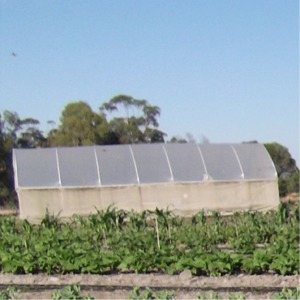
On the farm, there was a greenhouse that housed the new seedlings that would be planted at a later date. Due to the unseasonal bout of hot weather, they had to be watered more regularly to ensure they did not dry up. However, seedling watering is a fine art – too little water and they will dry up, too much water and they will drown. ‘Tis a fine balance!
Weeding
Of course, as with anything growing in the ground, there are always weeds! Being an organic farm, there was no use of chemicals, so the only way to remove the weeds was the old fashioned way – by hand! It was a tedious job, but the vegetable beds looked great by the time we were finished, and there is a strange therapeutic nature to the task.
 Animal Care
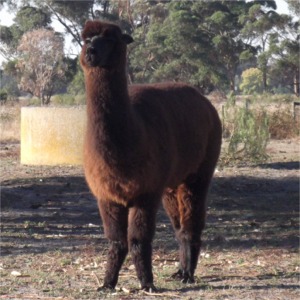
There were a variety of animals on site, aside from the dogs! There were two horses, Katie and Misty, who just roamed around a paddock, eating the odd-shaped carrots, as well as corn and feed. They shared their paddock with Giovanni, a skittish Alpaca who always had to fight the horses for food. I started trying to feed him separately once Katie and Misty had their food, and it seemed to work in my favour, as he got to eat a lot more and by the end of my stay he was a let less afraid of me – the last day I almost touched his nose! Not bad for an alpaca that normally ran in the opposite direction as soon as you opened the gate!
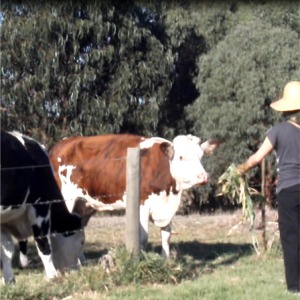 Then there were the cows. There were only a handful of them, and they ate the corn, and munched on the grass – they were cheap lawnmowers. Of course, at the end of the day, their purpose on the farm would eventually be meat, but not before their natural end. Last on the animal list was the chickens. They were multipurpose: free manure, bug eaters, ground diggers and egg producers! We had to take care of all the animals, feeding them every morning, letting the chickens in and out and brushing the horses. Excellent fun!
General Crop Maintenance
Of course, there is always general crop work that needs doing. One very important job we got to do was flush out the drip lines, which fed water to all the rows of vegetables. Since rain is not always that prevalent, the vegetables and fruit need a constant, reliable source of water, but they can get blocked with mud and other bugs, so they need washing out. An interesting task, especially when your partner doesn’t hold the line tight enough and a mini water fight breaks out! Just as we had to weed the vegetable beds, we had to mow the orchard, which was great fun – driving the ride-on mower!