Author Archives: SparkleGirlSparkle

WWOOF Host #6

Postcode: 2580
Days of Work: 9
Dates: 19th August 2013 – 29th August 2013
People: Julia (Host), Adrian (House Guest), Jin (Chinese WWOOFer)


This WWOOF adventure was bittersweet, as despite the fact that I was always filled with dread, and fear, and panic, and worry, whenever I went somewhere new, in some strange way I was actually going to miss that. I also found myself nowhere near as wimpish as I had been at the start. The location was remote, the accommodation basic and the facilities simple. But amazingly, I was okay with it. My, how I have grown!

I was excited to find out there would be another male WWOOFer, Jin from China but living in Japan, at the farm – it’s always good to have someone else there to experience the same things as you, and talk about everything. It definitely would have been a harder experience to survive had Jin not been there. Originally I started off in the lounge on a camp bed, since the host didn’t want to force Jin and I to share a room, but in the end we decided it would be fine and shared, and I think had a better experience because of it! Thanks Jin!

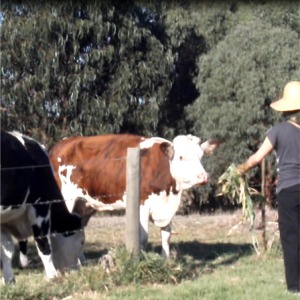
As with any working animal farm, there was always something to do. Jobs either involved the animals directly, or their environment/lifestyle, so it was an interesting mix of tasks. The farm was a working dairy farm. There was a small collection of six milking cows, a bull and three babies that were kept in the pastures around the dairy yard, while another couple of large herds (100+) remained out in the more distance pastures, as none of these cows were ready to birth and thus become milkers, although there were a good few almost ready to come in to join the milkers.
wwoof06_milkingMilking
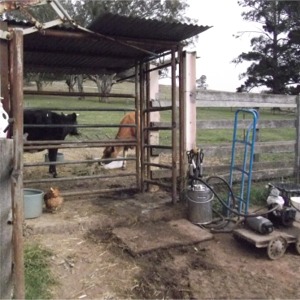
We were milking only once a day, since the milking herd was so small. Despite the small herd, the task would take a good two hours, if not three, to complete. There was only one milking stall with a portable pump, so the cows had to be escorted, occasionally bribed, into the stall, then milked and then taken out again. Cows can be very stubborn creatures, so it was never a simple or easy performance.

Prepping the Milk
Once the cows were milked, we had to check the milk for any imperfections and remove them with a spoon. When the cows are not milked dry the previous day, residue milk remains in their udders and once they are milked again, this old milk ends up in the new milk as fatty lumps. These need to be removed, as only the new, fresh milk is required. The milk is then poured into bottles and placed in the refrigerator.
wwoof06_walkingCow Walking
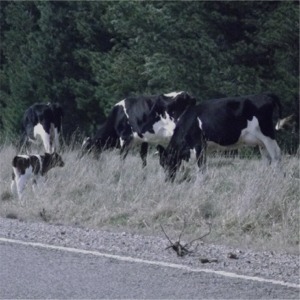
A council license allowed us to walk the milking cows along the main road, so they could eat the grass/berries/trees/etc that lined the roadside. It provided them with something a little different to eat than just grass, which in the end results in better milk. So, every afternoon, we took the cows out and walked them down the road and back again, for at least two hours, giving them all plenty of time to munch.

There were a couple of occasions where Jin and I attempted to walk them back to the gate, and they ended up walking past the farm and carrying on in the other direction! The first time it happened, they totally got away from me and it was only thanks to a kindly local driver that I managed to get them back. He went through the herd in his car, then stopped ahead of them and started encouraging them back in my direction, at which point I was more successful at getting them back in. The second time it happened, I had learned my lesson, and didn’t go chasing after them. I simply walked quietly and slowly through them until I was on the other side and was able to usher them back to the farm!
wwoof06_barnPrepping The Barn
The second night I was on the farm, we attempted to try something a bit different – separating the mums and older babies (Ginger Tea, Splodge and the boy calf) at night, so that come morning there might be more milk. So, each night we had to prepare the barn, ensuring there was enough hay on the ground, enough feed in the trough and enough fresh water to last the night.

Hillside Herds
Of course, the cows on the hillside need regular attention as well. We frequently went out to the outer pastures with a truck full of hay to feed them. The hay also helped to keep them warm at night, as the temperatures were still bordering around zero, since spring had not yet arrived. The cows do love their food and kept following the truck, even after we had delivered the food, in the vain hope they might get more. On one occasion, we had a few escape through the gate in their quest for food! But we got them rounded back up again.
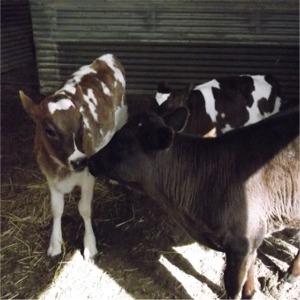
wwoof06_mumbabySeparating the Mums and Babies
Well, it was a difficult task, and actually required a little bribery. The night time hay feed was handed out to each cow/bull first, so that everyone had their own and were distracted by the feast that had been set before them. Once they were all merrily munching away, we were able to steer the calves back towards the barn and shut them in for the night. The first morning afterwards, there was some serious mooing and from a very early time, so we were all up early to do the milking and reunite them. Once the mums realised they would get their babies back, they were much more co-operative at night/in the morning, and the mooing back much less over the next few days. Buttons and Spiffy, since Spiffy was only a few days old, were the only mum and baby not separated.

Cow & Calf Searching
There were a couple of cows in each of the hillside herds that were due to give birth in the coming weeks, so regularly had to check that none of them had given birth. On my first night, I actually managed to spot a calf, hidden in the tuft of bush in the middle of a field! With a black and white mother and Jersey bull father, we were expecting a white and something calf, but instead it was a chocolate-coloured calf that we almost missed because of her unusual colour. We tried to get to her, but she bolted for the hedge, and at that point earned the name ‘Spiffy’ since she was such a fast mover. We never found any other mums and babies after that, although since I left the farm, another three cows have had their calves.
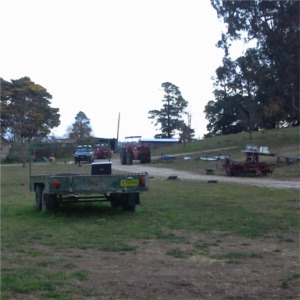
wwoof06_farmFarm Maintenance
I also did a little bit of other general farm maintenance while I was there, like helping to fix some broken fences around the property, repairing the tractor prongs so a delivery of hay could be taken, fixing a wobbly, leaking tap and prevent unnecessary waste of precious water and a little bit of firewood gathering, since the old farm house had no central heating – just the fireplace in the living room.

Water Pumping
With no rain for a few weeks, the water tank that normally supplied the milking cows was empty, so we had to do regularly trips with the mobile water tank to the small pond at the far end of the property. We would fill up at the pond, where the water was very clean due to the large reed collection which filtered the water, and then take the tank back to the pasture and fill up the water trough.

Chicken Care
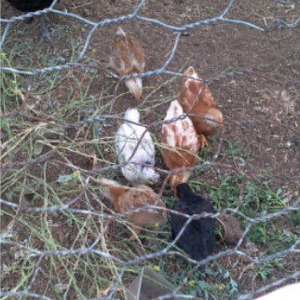
There was a small collection of chickens and roosters (9 and 2), that also needed taking care of. Daily we would collect their eggs, let them out of their pen in the mornings. They would wonder all over the farm during the day, although mainly remaining around the main house, garden and pasture, and then we had to ensure they were back in before dusk. We would feed them the household scraps at the end of the day, and make sure that the two roosters always remained in separate pens, otherwise they would fight!
WWOOF Host #5 – Part Two

Postcode: 2540
Days of Work: 10
Dates: 1st August 2013 – 10th August 2013
People: Mark and Jenny (Host), Meguyme (Japanese WWOOFer), Other Family Members


I ended up going back to Mark and Jenny’s and completing another 10 days of work for them since I enjoyed the experience so much the first time around, and they needed an extra pair of hands. There was the added bonus this time that there was another WWOOFer staying, so I got to share the awesomeness that is working for Mark and Jenny with Meguyme, who was from Japan. Also got to practice my Japanese again.

wwoof05_final_fieldThe Grand Return
My work was generally the same as before, so I knew what I was doing this time. I’ll tell you this – there is nothing like just you and nature! Just working alone, in the middle of a field, with the trees and your thoughts as company – it’s an unbelievable feeling and seriously calming. It gives you a strange inner peace. The best thing about returning to the farm, had to be that I was able to finish ‘my’ field, which I started on my first visit.

My Field
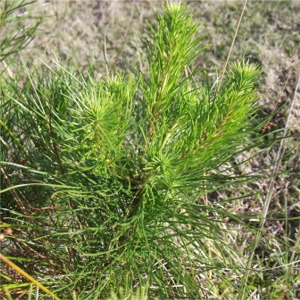
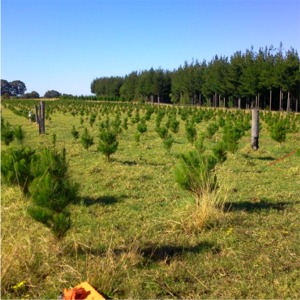
The field holds trees between 6months and 3years old. Of course, trimming and shaping is a bit like painting the Golden Gate Bridge – as soon as it’s done, it needs doing again. So, as well as finishing the remaining trees, I was making regular visits back to the original trees to re-trim, re-shape and remove dead branches.

wwoof05_meSaying Goodbye
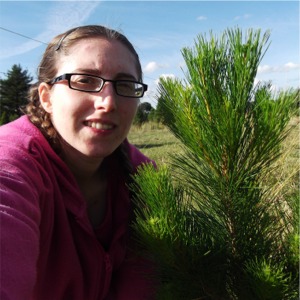
It was definitely a sad thing to have to say goodbye to everyone and the tree farm, and definitely an experience I will keep in my heart for all the right reasons this time! So, a final picture of me with my trees!

WWOOF Host #5 – Part One

Postcode: 2540
Days of Work: 19
Dates: 26th May 2013 – 14th June 2013
People: Mark and Jenny (Host), Other Family Members


Having had a mixture of good and bad previous WWOOF placements, I was a bit fearful to head to my next place. But I took a deep breath and embarked on the five-hour train trip to get there, and I was greeted by a lovely couple. The first thing we did was head to the supermarket, and I got the chance to get to know these new people before I headed to their farm, and within about five-minutes of the shopping trip, I knew it was going to be alright! How right I was!

wwoof05_cutTree Felling
Heading into winter, there was prep work aplenty for the coming spring season. Down in the ‘large tree field’ several had been ear-marked for felling. Most of the trees down there were over 7ft or taller, and while those size trees look good in a shop or small mall, they are not a good fit for the general living room. Therefore, only a handful are allowed to keep growing, the rest removed to allow planting space for the next generation of tree!

wwoof05_felledTree Removal
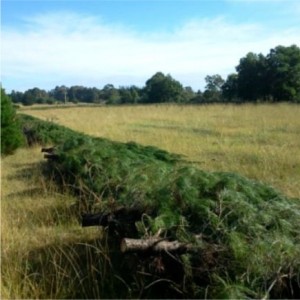
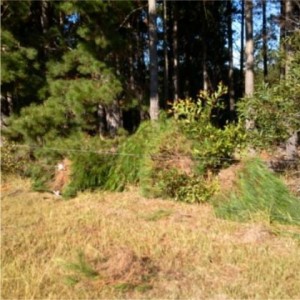
So, once the trees were felled with the chain saw, they had to be removed from the main field into the woodland area that surrounded the field. The woodland area actually had trees that were over 10years old growing, and the newly felled trees would be allowed to decompose at the base of these giant trees, and thus provide extra nutrients for their continued growth. The size of these trees meant they acted as a wind break against the winds that whipped across the open fields, and would eventually be felled for timber.

wwoof05_movingHow Do You Move Something That’s Twice Your Size And Weight?
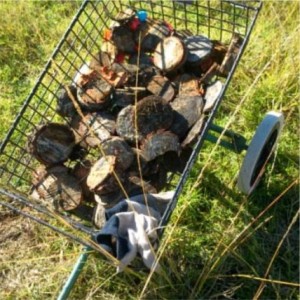
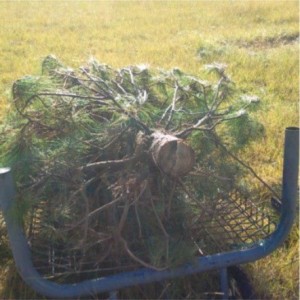
Good question! The simple answer is with a lot of hard work, energy and unknown physical strength. No, the truth of the matter is get the chainsaw again! We actually sawed the trees in half, although by the end of it all, I could have done with them being cut into quarters. But with the help of the trolley and some brute strength I did eventually get there. It took a lot longer than it looked like it should, but apparently I kept up a pace that was reasonable!

wwoof05_stumpsStump Collection
With the trees removed, there remained a large collection of stumps that would be a trip hazard for the customers that came to choose their trees in six-months time, as well as a hazard to the mower when it went up and down the rows. So, out came the chainsaw again – fun times! Each stump was cut right down to the base so it was level with the ground, and then came the arduous task of collecting all the chopped off pieces. Once again, these were distributed along the floor of the woodland.

wwoof05_shapingShaping
Interesting Fact: Christmas trees do not grow in Christmas-Tree-Shape! Yup, it’s true. They are just like any other tree and grow naturally! They actually require careful shaping and pruning in order to grow into the tradition shape that we have come to know and love about our trees. I was working on a field of young trees, so my shaping tasks could be carried out with just a pruner – the older trees required the chainsaw! But when I was eventually finished (this trip and the next one), I had a field of young trees that had the potential to be perfectly shaped once they reached their ideal Christmas Tree felling age!

wwoof05_trimmingTrimming
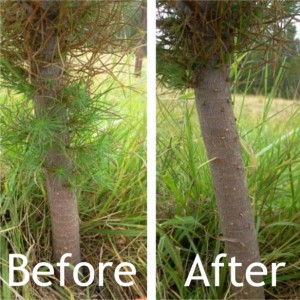
Just as important as shaping, because without trimming away the unnecessary branches and ‘fluffy stuff’, the trees cannot grow big and strong. By ‘fluffy stuff’ I mean the green leafy bits that are starting to grow at the bottom of the trunk. Because they are at the bottom and closest to the water/food source, they take everything first, with only a small amount then left for the main branches above. So, remove the fluffy stuff beneath the first main branches, and the water/food can go straight to them and they grow big and strong, just like a Christmas tree should be!

wwoof05_seedlingsSeedlings
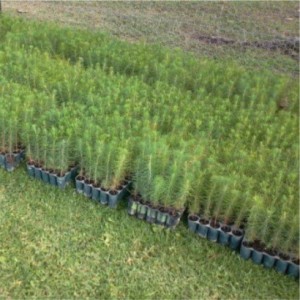
Towards the end of my first trip to the farm, the new seedlings were delivered. This year, they were in individual trays, which made it a lot easier to care for them. In previous years they have been delivered in cardboard boxes, and had to be planted straightaway. This time, because of the delivery method, we were able to keep them in their trays and allow them to grow bigger and stronger before eventually being planted into the ground (the majority were ground planted between my first and second visit). In the meantime, we had to keep them fed and watered to ensure healthy seedlings, so there was a daily watering, and occasionally twice a day if the heat and/or wind picked up!

WWOOF Host #4

Postcode: 3981
Days of Work: 22
Dates: 26th February 2013 – 20th March 2013
People: Andrew (Host), Yukari (Japanese WWOOFer), Belle (Taiwanese WWOOFer), Miako (Japanese WWOOFer), Megan (Scottish WWOOFer)


I went straight to Host #4 from Host #3. Sally was gracious and drove me to meet Andrew, my new host, and the morning we left, we had the worst rain storm Melbourne had seen in months, which was generally welcomed because of the increasing heat temperatures. However, it made driving a nightmare, especially when viability was cut down to about a car’s length! We headed straight out to the farm, and during the short trip, the weather eased, so I was able to get cracking with the work as soon as I arrived.

wwoof04_friends1Friends of the World
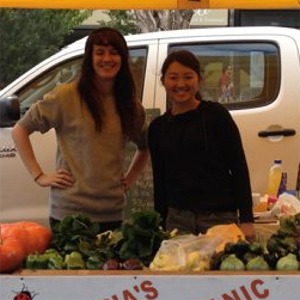
This was going to be the first place where there had been other WWOOFers (I don’t count Therese and Travis in Bathurst as they were permanent and more like regular workers, at least to me!). When I arrived, there were two other people in residence – Yukari from Japan and Belle from Taiwan.

wwoof04_friends2
The farm is very popular with WWOOFers, and WWOOFers come and go at quite a pace. Despite only being there for just over three-weeks, both Yukari and Belle had left, with Miako from Japan and Megan from Scotland arriving in their places! The thing I miss most about these wonderful people is the late night chats in our shared bedroom!

The work hours were long, but with reasonable breaks. Unlike animals, the fruit and veg don’t mind if you take a long lunch break – they’ll still be there growing strong when you come back! The majority of our workload was picking the vegetables, fruits and herbs that were ripe and ready for market.

wwoof04_pickingPicking
We picked: tomatoes (three different varieties), runner beans (green, purple and white), cucumbers (three varieties), zucchinis (two varieties), lettuce, carrots, spring onion, radish, beetroot, silver beet, corn, spinach, dill, parsley, basil, coriander, rock melon, pumpkin, squash, apples (about ten different varieties), oranges, peaches and pears!

Packing
Three times a week, the farm produce was taken to market – twice a week to a wholesale market in the city, and once a week to a local farmers market. Therefore, we did a lot of fruit and vegetable packing in the main shed, moving the packed boxes into the cool room ready for the morning. Most of the vegetables had to go through a three-stage wash process where the dirt was scrubbed away. Each wash bath had a sieve and we had to remove the dirt and bits that accumulated in the water with each batch of vegetables. Once fully cleaned and checked for imperfections, the successful fruit and veg was loaded into the boxes. The odd shaped veg went to the house for us to eat, the damaged veg was taken to the compost bin to be reintegrated to the soil.

wwoof04_greenhouseSeedlings
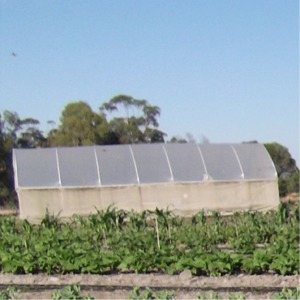
On the farm, there was a greenhouse that housed the new seedlings that would be planted at a later date. Due to the unseasonal bout of hot weather, they had to be watered more regularly to ensure they did not dry up. However, seedling watering is a fine art – too little water and they will dry up, too much water and they will drown. ‘Tis a fine balance!

Weeding
Of course, as with anything growing in the ground, there are always weeds! Being an organic farm, there was no use of chemicals, so the only way to remove the weeds was the old fashioned way – by hand! It was a tedious job, but the vegetable beds looked great by the time we were finished, and there is a strange therapeutic nature to the task.

wwoof04_alpacaAnimal Care
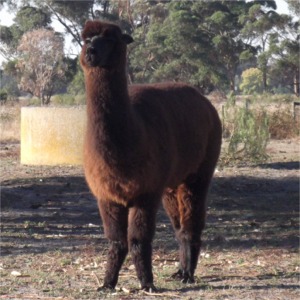
There were a variety of animals on site, aside from the dogs! There were two horses, Katie and Misty, who just roamed around a paddock, eating the odd-shaped carrots, as well as corn and feed. They shared their paddock with Giovanni, a skittish Alpaca who always had to fight the horses for food. I started trying to feed him separately once Katie and Misty had their food, and it seemed to work in my favour, as he got to eat a lot more and by the end of my stay he was a let less afraid of me – the last day I almost touched his nose! Not bad for an alpaca that normally ran in the opposite direction as soon as you opened the gate!

wwoof04_cowsThen there were the cows. There were only a handful of them, and they ate the corn, and munched on the grass – they were cheap lawnmowers. Of course, at the end of the day, their purpose on the farm would eventually be meat, but not before their natural end. Last on the animal list was the chickens. They were multipurpose: free manure, bug eaters, ground diggers and egg producers! We had to take care of all the animals, feeding them every morning, letting the chickens in and out and brushing the horses. Excellent fun!
General Crop Maintenance
Of course, there is always general crop work that needs doing. One very important job we got to do was flush out the drip lines, which fed water to all the rows of vegetables. Since rain is not always that prevalent, the vegetables and fruit need a constant, reliable source of water, but they can get blocked with mud and other bugs, so they need washing out. An interesting task, especially when your partner doesn’t hold the line tight enough and a mini water fight breaks out! Just as we had to weed the vegetable beds, we had to mow the orchard, which was great fun – driving the ride-on mower!

WWOOF Host #3

Postcode: 3812
Days of Work: 28
Dates: 29th January 2013 – 25th February 2013 (Left 26th at 8am to head to WWOOF Host #4)
People: Sally (Host)


Apologies now for the lack of images in this post, but my camera had a spasm attack and re-formatted my memory card, thus deleting all my photos! Boo 🙁

When I first made arrangements to head to a Lavender Farm, all I could think about was the lavender bushes that we used to have in the UK, and how they were always covered with bees. Bees are great, don’t get me wrong; I don’t even want them to all die off, (wasps on the other hand is a whole other matter!) But I am allergic to them, so, hence the initial trepidation.

To my relief, I discovered that thankfully the time of year I was visiting, this wouldn’t be an issue. The growing and flowering of the lavender, which is the part that attracts the bees, would have already happened. The lavender that I would be around would be drying. Although I would later come to learn that even dried lavender captures the attention of the most adventurous and sleepy bees!

So, with peace of mind, I headed off on my first (cheap!) domestic flight – no mean feat for someone who is not too comfortable with flying. I will fly, I’m not that phobic about it, but I do have a tendency to take my overactive imagination with me when I step on board. I over analyse every single noise: What was that? Does the air steward look worried? What is she worried about? What does she know that I don’t? Thankfully, though, the flight was uneventful.

I was landed with an aisle seat, so didn’t get to see Sydney disappear or Melbourne creep up on me. But safely down in Melbourne, I immediately got to experience the chilling breezes of the city. Having just come from Sydney and temperatures that were indicative of the two-week scorching hot summers of the UK, to walk out to 17 degrees was a shock to the system, especially when dressed in nothing more than t-shirt and shorts!

A SkyBus trip to the city, followed by the unnerving task of trying to read the departure board at Southern Cross staying, I was finally cruising my way through the suburbs of Melbourne on the metro train. Reaching the end of the line, I was greeted by my host and taken by car to my new home for the next few weeks, and spent the evening getting myself familiar with everything, ready for work the following morning and all the exciting new things I was going to learn about lavender farming.

And learn a lot I did! I feel like a total wealth of knowledge now. Okay, that is probably a grand over-estimate of how much I actually know about the subject, but I know more than I did when I started, and I hope the little tit-bits I’ve included below give others a little insight into this world!

Harvesting Lavender
This is completed, on this farm and the others that my host occasionally tends to, not by machine, but by hand with a scythe. And it is very hard, tedious work! You really need to have a strong back and tough hands. The process normally happens early in the summer, which does mean the idyllic lavender field images are short lived. It can be carried out later, but if this happens, the quality of the flowers will be diminished.

Drying Lavender
Once the lavender has been harvested, there are two processes that it can go through – steam distillation (to collect the essential oils) or drying (in order to use the flowers/plant material). For drying, bunches of lavender are tied together and then hung up in a hot, dry environment, where the moisture can evapourate and created a bunch of dried flowers. However, any moisture in the air, be it from rain or condensation, during this period can put the flowers back to square one, as lavender has the ability to absorb water vapour from the air around it. Thus, the drying process can be quick or timely, depending on the weather and environment.

Grading Lavender
Who knew! There are actually different grades of lavender! I spent quite a lot of time grading the dried lavender, and getting it processed and sorted for varying products and uses. The dried lavender goes through a three-tier system where the larger flowers and stalk get caught up and pulled out. The lavender that goes through all four layers is the finest lavender available, and is used in products like loose-leaf tea or for cooking (my host’s lavender scones were legendary and apparently to die for – I just unfortunately never got a chance to try them!). The larger lavender buds are then more suitable for use in projects such as heat packs and cuddly toy fillings.

Lavender Uses
Using either lavender buds or oil, there are so many uses and products that can combine and use lavender. On the farm, the home grown lavender was used to make a variety of products, most of which I actually had a chance to make! Here is a list of just some of the things we made with our lavender: soaps, toiletries, creams, lotions, balms, oils, perfumes, honey, teas, lollies, candles, linens, heat packs, pillows and teddy bears! I also got to be present for the making and launching of a travel range that meets the 100ml or less liquids and, gels restrictions for air travelers.

Crop Maintenance
With the harvested crops no longer in the ground, the weeds have even more space to grow and thrive, so have to be kept under control. Because the farm is organic, no chemicals can be used, so all weed removal must be carried out by hand. Again, tedious and blister making. I managed to rip the skin off both my little fingers where they were bending around the weed stalks! Generally speaking, a lavender plant is good for about 8-12 years, depending on the seasons/weather/land, so good crop maintenance is essential – much like the oil 😉

WWOOF Host #2

Postcode: 2795
Days of Work: 3
Dates: 17th January – 20th January 2013
People: Keith (Host), Travis and Therese (Full-time employees and WWOOFers)


This time, I headed out to a small farm in the middle central tablelands, NSW! Very pretty surroundings, but a little concerning considering the temperatures that were due to be hitting the area and the risk of bushfires. But then, you can’t be in NSW in January and NOT get them! It’s something to get used to and live with!

wwoof02_showerBasics in the Outback
Things were a little primitive, accommodation wise, and it took some getting used to. I had not been prepared mentally for what greeted me, mainly because I had not been told exactly what was going on. However, my first WWOOF experience away taught me some valuables lessons, least not what to ask before I make a commitment to stay somewhere!

Ready to Leave?
I was ready to turn right around and head back to the train station, however, I managed to talk myself into trying it for the night and seeing how it was in the morning. In retrospect, I think had I known what I was going to end up with, as opposed to what I was under the impression would be there, then it wouldn’t have been so bad.

wwoof02_bedBed Dilemma
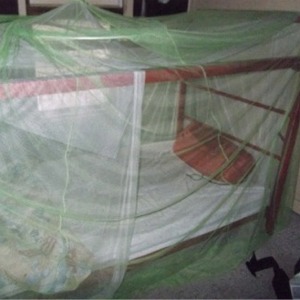
Anyway, job one was to sort out the bedding area, and it was still just a mattress and the mozzie net and frame still needed to go together! Bed put together and my own little creepy crawly defense in place! That made it all a little better. Then to get used to the compost toilet outside, and the shower that was a hose pipe in the middle of the field! Rustic! So, after a somewhat sleepless night, it was off to work and the exciting prospect of learning new tasks.

Weeding
Removing all the weeds from the veggie patches – great fun one afternoon as it decided to rain, and give us a break from the 40 degree heat! It was actually quite pleasant weeding in the rain! Although very muddy, and I have come to learn that I can get dirty/made a mess in the cleanest of situations, let alone when mud and rain are involved 😉

wwoof02_nettingFruit Tree Netting
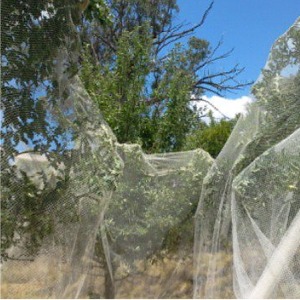
Ended up doing this on the hottest day! Temperatures hitting over 40 and we were down in the apple orchard, climbing ladders, swinging from branches (not really, that would be health and safety!), and putting up large nets around the trees to stop the birds from eating all the precious fruit

Seedlings
Firstly, we had to make newspaper pots using a device to shape the paper. The reason for this was once the seedlings were planted, they could be put straight into the ground in the pots, thus not disturbing the growing roots. Since the pots of made of paper, they are also biodegradable, so put back into the soil. We planted seedlings into the pots ready to take to the greenhouse where they will grow for a few days or weeks before being planted into the veggie patches.

wwoof02_cornVegetable Picking
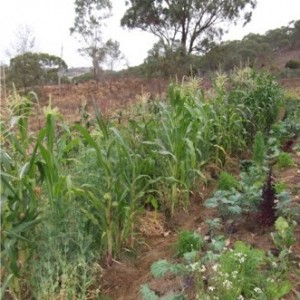
Of course, with it being a vegetable farm, there was plenty of vegetables to be picked and made ready for the market/direct to customer selling. Most vegetable picking was of cucumbers, rock melon, rhubarb, spinach and another green-leafed vegetable that was not particularly popular with customers!

Planting
Planting the seedlings into the veggie patches replacing old ones that have died or already been harvested and because they are made in the newspaper pots, they can be planted in the pot because it’s all biodegradable! Organic farmers have the right idea – why make more problems/waste for yourself when you don’t have to?!

wwoof02_chickenAnimal Care
We had an alpacha with a bad eye, so had to corner him and administer eye ointment – for a baby he put up quite a fight! Then of course, we had the amazing escaping chickens! Baby chicks who still weren’t quite big enough to be left to roam free, kept making a break for freedom, so had a crash course in how to capture a chicken! Of course, that came in handy as they escaped more than once, despite us relocating their cage!

It was definitely an experience, and one that I am glad I stuck it out, rather than high-tailing it at the first chance I had. It’s not something I would do again, but I am glad I did it.

WWOOF Host #1

Postcode: 2146 (Not eligible)
Days of Work: 2
Dates: 11th January 2013 and 16th January 2013
People: Roberta (Host), Mark (French WWOOFer)


Well, I decided the best way to see if I liked the WWOOFing experience would be to find somewhere nearby, whereby I could just work for the day, and return to my mum’s in the evening. That way, if it wasn’t working out, I would only have to get through the day. Plan conceived, time to put it into action!

So, I grabbed my WWOOF Book and started searching through the NSW section for my mum’s postcode. Low and behold, I actually found a WWOOF host with the same postcode. A quick look on GoogleMaps told me it was within walking distance (25-30mins), and so I whipped off an email. A fast, positive response, and my first WWOOF experience date was fixed: 11th January 2013 – the start of my WWOOFing adventure!

I ended up with a lovely host, Roberta, who had a very large garden (don’t want to think how many times bigger than mum’s – maybe 20? ), where she kept chickens, a variety of fruits and vegetables, all within a permaculture-based designed garden. This was my first exposure to permaculture, and I really like the principles, although I would like to see how one creates a permaculture garden when chickens/rabbits/animals are not involved in the chain.

wwoof01_gardenPermaculture
Permaculture makes a lot of sense, designing the garden with the elements like sun coverage, wind directions and water/drainage. It is also clever in the way that plants and the like are selected – nothing in a permaculture garden has just one use; they have two or more! That is the beauty of it.

Grey Water
Roberta had her grey water (used water from the washing machine/kitchen sink) redirected so that it heads down a pipe and straight into the banana tree section, making use of water that the rest of us, especially from Europe/America where water is readily available, would normally through away. It means the banana trees get watered, and therefore more bananas! One selection of fruit that will be fresh from the tree and free to eat!

wwoof01_chickensChickens
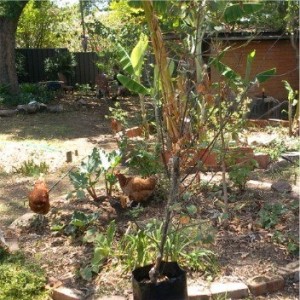
The chickens have multiple purposes, running around the garden eating the bugs, digging through the dirt and thus turning over and aerating the soil regularly. And of course, they poop everywhere, so there is plenty of manure to fertilize and feed the plants! Double bonus – they lay eggs! So, yet another food source, readily available, generally daily, if not every few days, and fresh! You can’t get much fresher than from the bottom of a chicken to your dinner plate, and there is nothing like FRESH eggs. Triple bonus – free food!!!

Walkway Paving
We soaked several layers of newspaper and then placed them over the soil (a kind of weed mat) and then used the leaves we had raked to cover the newspaper and then watered the whole combination. The idea here is to create a more natural pathway than just soil. Given a few months, the pathway will resemble a forest floor, where the leaves fall and naturally become part of the pathway.

wwoof01_gardenWeeding
A very important job. For every weed that shares the soil with the fruit and veg, it is one more source that is soaking up the precious water and nutrients. Why feed the weeds when you can feed the tomatoes? Of course, there are a few weeds that are edible, but unless you planted them on purpose, then they’re still weeds!

Worm Feed
The worm farm dirt is used and mixed with water to make a feed for the plants that is both natural and very rich in the nutrients needed by the plants. It’s a bit like playing mud pies as a child, but because it’s all natural it’s all very good for the plants, and with the very dry NSW weather, it was important that the fruit trees got a can of water each, and then the rest of the bed got a really good dose around the roots.

Seed cleaning
Collecting and cleaning seeds from the stems ready to store for future planting or trading with the local seed store circle

Mulching
Using dried grass and other natural produces to make a layer over the soil to prevent weeds appearing

All in all, it was an enjoyable day. So enjoyable, that I returned for another one-day session on the 16th January! Because I had nothing else to do and I wanted to make myself useful!

The WWOOF Book

So, I got my WWOOF book and my membership for the year.

Why not go and work for 3-months and earn money?
In principle, that’s a nice idea, but there’s no substance to that experience. At least, in my opinion. While I may consider this an option further down the line, I am going the volunteer route for now and heading across Australia with WWOOF.

Okay, so, why WWOOF?
Why not? Experience and knowledge, basically. It’s just as good as paid work, and I see it as being that bit more involved. Not necessarily work wise, because you’re basically doing the exact same work, but knowledge wise. I think most people who are WWOOF hosts are going to be a bit more involved with you while you are staying, and more willing to share their knowledge of their operation and everything that is involved in organic farming.

Personally, I see the paid work, especially fruit picking, a bit cattle-truck like. They ship you in, you pick fruit for 8-hours, they ship you out again. I want to know why there are certain fruits growing, which varieties of apple or orange are more hardy. I always have questions and I always want to learn – those particular objectives seem a little more hard to come by via paid work.

So onto the volunteering… It’s always good for the heart to ‘help out’ and feel useful. Besides, no amount of money is going to get you the cultural experiences and life stories that can only come from Australian (and others!) farmers who have seen it all, and in the case of some hosts, been at it for years with plenty of stories to tell. Where else could you be totally immersed in a family and farming life?

Sydney – home of Jet Pack Santa

So far, I have been hauling myself up in Sydney, while the family acquaint themselves with their new surroundings, and while we celebrate through the festive period. Since the holiday season is supposed to be a time to spend with family, it didn’t quite seem right to abandon them in favouring of exploring the country.

So instead, I have been enjoying the sights and sounds that Sydney’s festival celebrations had to offer. And boy have I seen a few things! To kick off the Christmas period, we all headed down to Darling Habour to join thousands of other fun-loving, Christmas-seeking people to welcome in the festival period with a celebration of all things Santa and water!

There were Santas everywhere! Santa covers on the street lights; Santas entering the harbour on canoes, on sail boats, jet skis and even water skiing! Of course, I thought by the time the water display had finished that we had seen it all, but boy were we wrong!

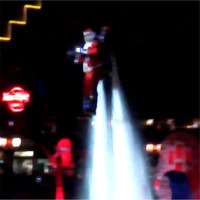
There was one final Santa to come – on a jet pack! Powered into the night sky by the two powerful water jets shooting out of his backpack! Of course, this special Santa had a special job. He hovered over the harbour and carefully jet-packed himself into place. Riding high above the water, pressed a button and a pulse of light went shooting off towards the Convention Centre.

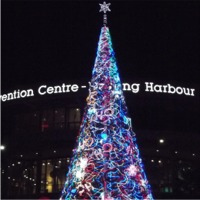
It stopped and the Darling Habour Christmas Tree burst into full lights, the fireworks simultaneously going off in the background! This was our first voyage into Sydney festivities, and it was absolutely mind-blowing!

Jet-Pack Santa

Jetting into Darling Harbour, Santa’s new form of transport

Darling Harbour Christmas Tree

Christmas is here

The Adventure Begins…

…Well, technically it’s already begun!

My blogging adventure is just beginning though!

Earlier this year, the decision was made, as a family, to head to Australia, and all as a result of a little joke on my part! We had been discussing the possibility of moving out of the UK for a while, for quite some time, although our intentions were to look the other direction around the world! We had been putting off any investigations into possible locations due to personal family commitments, but one night we were all just talking about moving generally, going on holiday, and a few other random conversational topics which led to talking about destinations around the world.

Then, I think, an advert by the Australian Tourist Board came on the television.  I made a joke that I would never go to Australia on holiday because the flight was just too long. Next thing I know, we are talking about going there to live instead! And the rest, as they say, is history!

So, next thing I know, I’m sorting out my Working Holiday Visa and looking to embark on an adventure across the world, with my mum, sister and cats. Where I go from here, is where the adventure really begins!

Stay tuned!